

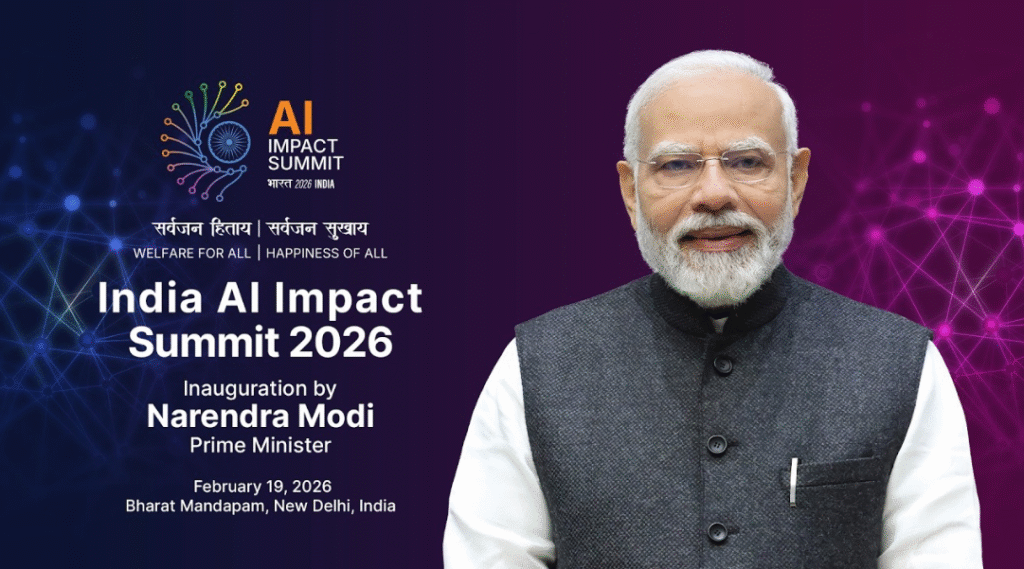
The India AI Impact Summit 2026, held from February 16 to 20, 2026, at Bharat Mandapam in New Delhi, marked a pivotal moment in global AI discourse. Organized by the Government of India under the IndiaAI Mission, this flagship event brought together world leaders, tech giants, policymakers, and innovators to advance AI for humanity, inclusive growth, and sustainability. Inaugurated by Prime Minister Narendra Modi, the summit emphasized India’s role as a bridge between advanced economies and the Global South, drawing over 600,000 in-person attendees and millions virtually.
Background and Objectives
The summit built on previous global AI gatherings, representing the fourth in a series aimed at transitioning from dialogue to actionable impact. Anchored in three core “Sutras”—People (serving humanity with dignity and inclusivity), Planet (aligning innovation with environmental stewardship), and Progress (equitably sharing AI’s benefits)—the event sought to forge collaborations and measurable outcomes. Its guiding mantra, “Sarvajan Hitaya, Sarvajan Sukhaya” (Welfare for All, Happiness for All), underscored a human-centric approach to AI governance.
Objectives included democratizing AI resources, promoting safe and trusted AI, and addressing challenges like job disruption, ethics, and security. The summit positioned India as a hub for “Made in India” AI solutions, leveraging its digital public infrastructure for low-cost, scalable deployment worldwide.
Inauguration and Prime Minister’s Address
Prime Minister Narendra Modi formally inaugurated the summit on February 19, 2026, likening AI to transformative inventions like fire and nuclear power, emphasizing its potential to multiply human capabilities while demanding ethical responsibility. In his address, Modi outlined India’s “M.A.N.A.V.” Vision for AI: Moral and Ethical Systems, Accountable Governance, National Sovereignty, Accessible and Inclusive, and Valid and Legitimate. He stressed that AI must remain human-centric, not machine-centric, and called for global standards like authenticity labels and watermarking to combat deepfakes.
Modi highlighted AI’s role in creating smarter jobs and fostering innovation, reassuring that “preparation is the best antidote to fear” amid concerns over layoffs. He invited the world to “Design and Develop in India. Deliver to the World. Deliver to Humanity,” showcasing India’s talent pool and ecosystem in semiconductors, quantum computing, and startups.
Key Participants
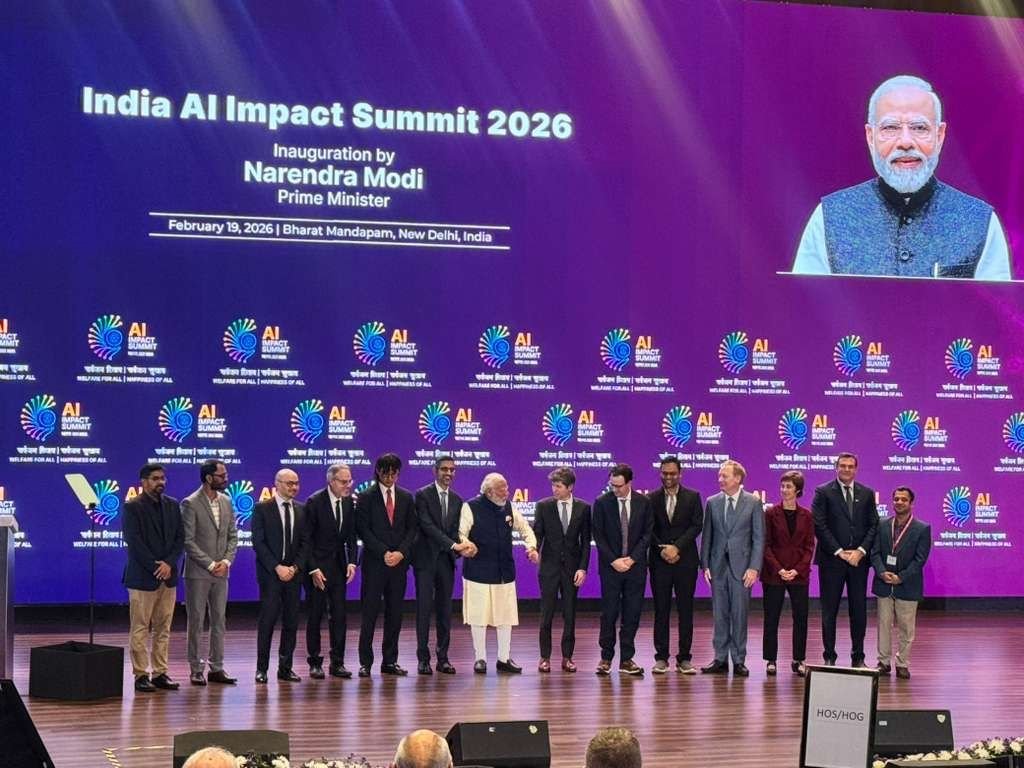
The event attracted representatives from over 100 countries, including more than 20 Heads of State or Government and around 60 Ministers or Vice Ministers. Notable dignitaries included French President Emmanuel Macron, Brazilian President Luiz Inacio Lula da Silva, and UN Secretary-General António Guterres, who echoed calls for AI to “belong to everyone.”
Tech leaders were prominently featured, with over 500 global AI executives in attendance. Key figures included:
- Sundar Pichai (CEO, Google and Alphabet)
- Sam Altman (CEO, OpenAI)
- Jensen Huang (Founder & CEO, NVIDIA)
- Dario Amodei (CEO, Anthropic)
- Brad Smith (President & Vice Chair, Microsoft)
- Yann LeCun (Executive Chairman, AMI Labs)
- Demis Hassabis (Co-founder & CEO, Google DeepMind)
Indian industry titans such as Mukesh Ambani (Reliance Industries), Nandan Nilekani (Infosys), and Jeet Adani (Adani Group) also participated, alongside startups, academics, and youth innovators.
Agenda and Themes
The five-day agenda was structured around seven “Chakras” or thematic areas for global cooperation:
| Chakra | Focus Area |
| Human Capital | Building skills and lifelong learning for AI-driven economies |
| Inclusion for Social Empowerment | Ensuring AI benefits marginalized groups and promotes gender equality |
| Safe & Trusted AI | Developing ethical guidelines, transparency, and safeguards against misuse |
| Science | Advancing AI research and innovation |
| Resilience, Innovation and Efficiency | Enhancing systems for sustainable development |
| Democratizing AI Resources | Making compute, data, and tools accessible globally |
| AI for Economic Development & Social Good | Applying AI to sectors like agriculture, healthcare, and education |
Highlights included the India AI Impact Expo with 300+ exhibitors from 30+ countries, a Research Symposium on February 18 featuring keynotes and posters, and Global Impact Challenges like “AI For All,” “AI By Her” (women-led innovations), and “YUVAi” (youth solutions). Sessions addressed AI governance, with India pushing for responsible use amid ongoing domestic policy development.
Major Outcomes and Commitments
The summit culminated in significant pledges and achievements:
- Investment Commitments: Over $240 billion in AI-related investments were announced, targeting infrastructure, hardware, and applications. Key pledges included:
- Reliance Industries: $110 billion over 7 years
- Adani Enterprises: $100 billion by 2035
- Google: $15 billion for an AI hub in Visakhapatnam
- Other contributors: Lightspeed Venture Partners, Tata Group, and more
- Infrastructure Boost: India plans to add 20,000 GPUs, expanding capacity beyond 38,000 under the IndiaAI Mission.
- Global Declaration: 92 countries endorsed the India AI Impact Summit Declaration, outlining a shared roadmap for AI governance and collaboration.
- Records and Launches: A Guinness World Record was set with over 250,000 AI responsibility pledges in 24 hours. Launches included the Casebook on AI and Gender Empowerment (by IndiaAI Mission, UN Women, and Ministry of Women and Child Development) and sovereign AI platforms like Lexlegis On-Desk.
- Partnerships: Deals like OpenAI’s collaboration with Tata Consultancy Services and Google’s partnerships with Indian institutions highlighted commercial momentum.
Challenges and Controversies
Despite its successes, the event faced logistical hurdles, including severe traffic congestion, security delays, and organizational confusion, leading to frustrations among delegates. High-profile incidents included Bill Gates withdrawing from a keynote due to Epstein-related controversies, a university’s expulsion over a misrepresented robot dog, and a protest by the Indian Youth Congress criticizing the government’s handling. A viral moment involved AI CEOs hesitating during a hand-holding activity on stage. IT Minister Ashwini Vaishnaw apologized for initial issues.
Post-Event Updates
As of March 3, 2026, discussions continue on the summit’s legacy. Posts on X highlight its role in demonstrating sovereign AI and ecosystem-building, with over 850 companies and 118 countries involved. Initiatives like AI Safety Asia’s focus on crisis diplomacy underscore ongoing governance efforts. The event is seen as a signal of rising global competition in AI, with India actively shaping its architecture.
Conclusion
The India AI Impact Summit 2026 not only secured massive investments but also advanced a vision of ethical, inclusive AI on the world stage. By blending ambition with responsibility, India has positioned itself as a leader in the AI revolution, balancing innovation with human welfare. As PM Modi noted, the future lies in collective resolve to harness AI as a global common good.