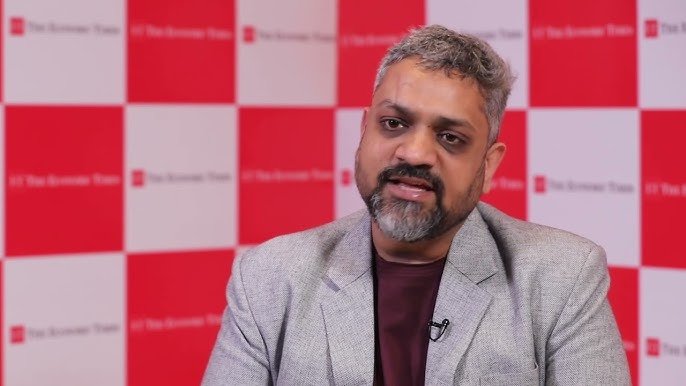
India’s listed edtech heavyweight PhysicsWallah (PW) is making a decisive pivot — away from the recorded video model that built the industry, and toward conversational AI tutoring embedded within live, structured learning environments. Co-founder Prateek Maheshwari, speaking to Moneycontrol following the company’s fourth-quarter earnings, laid out a vision for where he believes online education is heading next, and why PW intends to lead it.
The Death of Recorded Learning
Maheshwari didn’t mince words about the state of traditional edtech content. “Recorded learning is already dead,” he said. “The bigger opportunity is creating a one-to-one conversational AI tutor layered on top of live learning.”
The declaration reflects a broader reckoning sweeping through the global education industry. The rapid rise of generative AI tools like ChatGPT and Gemini has fundamentally disrupted business models built around pre-recorded content, search-driven user acquisition, and online doubt-solving platforms. A growing phenomenon of “zero-click” search behaviour — where students get direct answers from AI assistants without ever visiting an educational platform — has further intensified pressure on incumbents, raising hard questions about the long-term commercial viability of recorded educational content and traditional distribution funnels.
PW’s Competitive Advantage: Data and Distribution
Rather than treating AI as a threat, Maheshwari sees it as a race — and one he believes PW is positioned to win.
“The company with the maximum amount of data and the maximum amount of distribution will win the AI tutor race, and PW has both,” he said. The numbers behind that confidence are significant: 3.5 million learners spending close to two hours a day on the platform, collectively generating billions of data points every year. That scale of engagement, Maheshwari argues, gives PW a structural edge over both generic AI tools and smaller edtech rivals.
AI Moves From Feature to Core Infrastructure
Over the past year, PW has moved well beyond treating AI as a bolt-on feature. The technology has been embedded into multiple layers of the business — tutoring, evaluations, engineering workflows, and customer support.
Maheshwari revealed that more than 90% of student doubts raised on the platform are now resolved through AI systems, and that over 2 billion subjective answer sheets have been assessed using AI-driven evaluation tools.
On the workforce side, the impact has been more about future efficiency than immediate headcount cuts. “I would not say AI has led headcount optimisation so far,” Maheshwari acknowledged. “But for future expansion, we are not hiring heavily for subject matter experts. We are leveraging the same workforce and bandwidth through AI.”
The company has rolled out a range of AI-native products over the past year, including AI Guru, Ask AI, and AI Books. It has also built proprietary education-focused AI models — Aryabhatta, ConceptGuru, and Awaaz — designed specifically for Indian educational contexts rather than adapted from generic large language models. These systems are trained around Indian exam-prep workflows, vernacular learning patterns, and NCERT-aligned curriculum content, with a strong emphasis on multilingual, voice-led interaction.
Why Generic AI Won’t Replace Structured Learning
Maheshwari pushed back firmly against the idea that frontier AI models from major labs could simply substitute for structured educational platforms.
“Frontier labs are not designed for tutoring. They give one fluff answer. That’s not how people learn,” he said. “You still need a structured learning environment to grasp things, compete with peers, finish your course and deliver outcomes.”
It’s a pointed argument that goes to the heart of the industry debate: whether AI will ultimately empower established edtech platforms with proprietary data and structured ecosystems, or commoditise them out of relevance. For Maheshwari, the answer hinges on whether a platform can replicate not just information delivery, but the full architecture of learning — competition, accountability, curriculum sequencing, and measurable outcomes.
Expanding Beyond JEE and NEET
While AI dominates the strategic narrative, PW is simultaneously pushing hard into new segments beyond its traditional stronghold in JEE and NEET exam preparation.
State board categories grew ninefold year-on-year, while its K8 and Curious Junior segments expanded fourfold. Operations in South India nearly doubled during the year. On the skilling and employability front, PW Skills and PW Earners — initiatives targeting workforce readiness — crossed 100,000 enrollments within weeks of launch.
The company is also scaling its offline footprint aggressively, growing to 353 physical centres during FY26. Around 60% of those centres are already profitable, and PW is targeting break-even across its offline operations as a whole by next year.
Financial Recovery Takes Shape
The business’s financial trajectory is moving in the right direction. On May 27, PhysicsWallah reported a 76% year-on-year reduction in net loss for the fourth quarter of FY26, narrowing to Rs 69.1 crore from Rs 289.3 crore in the same quarter a year earlier. The company had also posted a profit of Rs 102.3 crore in the preceding quarter, signalling that its path toward sustainable profitability is gaining traction.
For PhysicsWallah, the message from its co-founder is clear: the era of passive video consumption in edtech is over. What comes next — a personalised, conversational, AI-driven learning experience layered onto live instruction and backed by proprietary data — is the battleground the company intends to own.